Mobile auto repair in Washington, DC
Brakes, batteries, AC, starters and more, repaired where your car is parked. Nearby mechanics bid on your job, the lowest bid is offered first, and you pay only when the work is done.

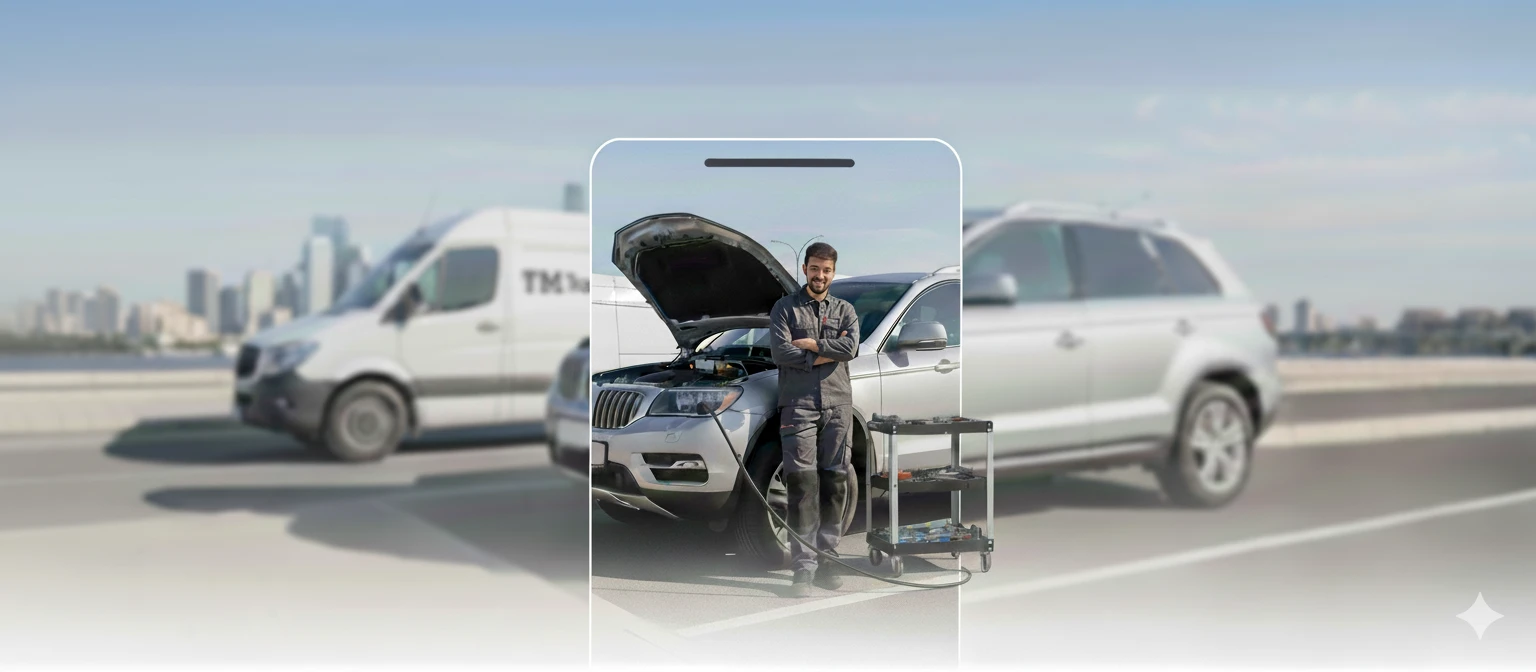
Repairs that can happen at your DC address
TravelMechanic is an online mechanic shop with no building to rent, so the mechanic comes to your home, office or parking spot. These are the jobs DC drivers request most, and what makes each one local.
Brake pads and rotors
Commutes on North Capitol Street, Rock Creek Parkway or the 14th Street corridor mean a lot of braking. Pads and rotors are among the most common driveway jobs, and the mechanic can usually do one axle or all four wheels where the car sits.
Battery replacement
Cars that sit on a rowhouse block for days and then make short trips are hard on batteries, and so are humid summers. A mechanic can test the old battery, swap it and check the charging system in one visit.
AC recharge and AC diagnosis
With average July highs near 88 degrees and heavy humidity, weak AC is a real problem by June. A recharge treats low refrigerant; if there is a leak or a failed compressor, the mechanic quotes the larger repair separately.
Alternator and starter
A car that clicks, cranks slowly or dies at a light is often a charging or starting problem. If it will not start, a mobile visit can save a tow out of a tight alley or garage.
Oil change and spark plugs
Routine service is easiest to book when you cannot spare the half day a shop trip takes. Pair it with a spark plug or filter job and the mechanic does both in one stop.
Check-engine and no-start diagnostics
A warning light before a DC inspection or a road trip needs a reading and a plan. A mechanic scans the codes, checks the likely causes and quotes the repair, and the inspection fee is credited if you go ahead.
Overheating and cooling system
Stop-and-go traffic in August is the classic setting for a failing thermostat, radiator or water pump. A mechanic can inspect the cooling system at your location, or tell you if the car should not be driven.
Pre-purchase inspection
Buying a used car from a seller in Maryland or Virginia? A mechanic can meet you at the seller's address and look the car over before you hand over money.
Browse the full list on our mobile auto repair services page, or read about brake pad replacement and starter replacement. If a job needs a lift or shop-only machinery, your mechanic should tell you before you accept a quote.
Why cars in DC need these repairs
The District packs heat, humidity, salt, stop-and-go traffic and street parking into a small area. Each one points to a different part of your car.
Heat and humidity
Average July highs sit near 88 degrees with humid air and afternoon storms. Batteries age faster in heat, AC systems work hardest, and cooling parts like radiators and thermostats get tested in standstill traffic.
Winter brine
Before storms the District pretreats primary routes with a salt-based brine. It helps keep ice from bonding to pavement, but salt on your car speeds corrosion on brake hardware, lines and underbody parts. A spring brake check is cheap insurance.
Short trips and street parking
Roughly a third of DC households do not own a car, and many that do park on the street and drive only a few miles at a time. Short trips do not fully recharge a battery, and cars parked outdoors collect more weather and wear.
Stop-and-go and rough pavement
Downtown traffic, bridge approaches and the ramps around I-395, I-295 and the Beltway mean frequent braking, and winter potholes are hard on tires, wheel bearings and suspension. Pulling or a grinding noise is worth a look.
How bids work, and why quotes vary
You will not find a flat price list here, and that is on purpose. The price depends on your car, the parts and who bids.
Text or submit
Tell us the make, model, year and what is wrong. Photos, videos and dashboard warnings help.
Mechanics bid
Nearby mechanics each price parts and labor at their own rate and add a travel fee.
You choose
The lowest bid is offered first. Accept it, wait for a new bid, or walk away.
Pay when it is done
Your card is held to reserve the visit, which is not a charge. You are charged after the work.
Each mechanic works out the parts and labor at their own rate and adds a travel fee. That is why two bids for the same brake job can differ. Every quote is a best estimate, never a fixed, final or guaranteed price.
Because there is no shop or rent behind the job, the savings are passed to you. You can see your mechanic and read their reviews before the visit, and you are never asked to commit until you have seen a price.
If the price changes during the repair, because it needs more parts or time or a part is out of stock, you hear first and can cancel for a full refund. Cash is never accepted; pay by card, bank account, Klarna or Afterpay.
How long the repair itself takes
These are general ranges for the work once your mechanic is there. They are not arrival or completion promises, and your mechanic will give you a realistic estimate when you confirm.
Oil change, battery swap
Usually a short visit once the mechanic has the right part.
Brake pads on one axle
Often around one to two hours; rotors, calipers and stuck hardware add time.
Alternator or starter
A few hours is common; tight engine bays and corroded bolts can stretch it.
AC recharge
Quick when it is only refrigerant; a leak search or compressor swap takes longer.
Diagnostics
Reading codes is fast; confirming a cause on an intermittent fault can take longer.
Not sure what is wrong? Describe the symptoms and a mechanic can quote an inspection. If you go ahead with the repair, the inspection is credited toward it. If you decide not to fix it with us, the fee goes to the mechanic's time and travel. If the mechanic can't diagnose exactly what's wrong, you get a full refund.
Parking, inspections and what to check with the city
This is general information, not legal advice. Check current requirements with the agencies below.
Street and garage parking. Many DC blocks are residential permit parking zones; zones follow ward lines and a permit is only valid in its zone, with a posted limit for other cars. If your car is on a signed block, tell the mechanic the exact spot. The District regulates use of public space through DDOT, so jobs that need the car raised or tools laid out may be better in a garage, a private driveway or an office lot. For apartment and condo garages, ask the building first.
Inspection. DC law requires registered vehicles to be inspected for safety and exhaust emissions at intervals of no more than two years, with exemptions for some new and older vehicles. A mobile mechanic cannot issue the sticker, but can fix what causes a failure. Get a quote for diagnostics or an inspection ahead of the test. Confirm details with the DC DMV.
Virginia. Virginia requires an annual safety inspection, and an emissions test every two years for vehicles garaged in parts of Northern Virginia including Arlington and Fairfax counties. Check Virginia DMV and DEQ, and the Maryland MVA for Maryland cars.
Neighborhoods and suburbs we cover
These areas match our Washington, DC city page. Pick the setup closest to yours so your mechanic can plan.
Capitol Hill and Southeast rowhouses
Rowhouse blocks, alleys and zoned street parking. Most work happens at the curb, in an alley space or at a private pad, so tell the mechanic which one.
Navy Yard and the waterfront
Newer apartment buildings with shared garages. Ask management about outside contractors and guest access first.
Georgetown, Foggy Bottom and Dupont Circle
Narrow streets, short-term parking and condo garages. Office and building lots are often the easiest place for a longer job.
Columbia Heights, U Street and Shaw
Dense blocks with a mix of garage and permit-zone street parking.
Brookland, Takoma and Northeast
More driveways and side lots than the core, which makes brake and battery jobs simpler to set up.
Anacostia, Congress Heights and Southeast
Residential streets and driveways east of the river. Heavy I-295 and Suitland Parkway use is hard on tires and brakes.
Arlington, Alexandria and Falls Church
Close-in Virginia suburbs with apartment lots, townhome driveways and their own emissions rules.
Bethesda and Silver Spring
Close-in Maryland suburbs where requests are handled the same way. Check the Maryland MVA for state rules.
Mobile auto repair in DC: common questions
How much does mobile auto repair cost in Washington, DC?
It depends on your vehicle, the part and the job. Each nearby mechanic works out parts and labor at their own rate and adds a travel fee, which is why bids differ. The lowest bid is offered to you first, and every quote is a best estimate, not a fixed or final price. You can accept it, wait for a new bid, or walk away, and you pay only when the work is done.
Which repairs can a mobile mechanic do at my address in DC?
Most jobs that do not need a vehicle lift or shop-only machinery: brake pads and rotors, batteries, alternators and starters, oil changes, spark plugs, belts, AC recharges, check-engine and no-start diagnostics, overheating checks and pre-purchase inspections. If a job needs a shop, your mechanic should say so before you accept a quote.
Can a mobile mechanic work on my car if I park on a rowhouse street in Capitol Hill or Columbia Heights?
Often yes for work such as batteries, brake pads, diagnostics and fluid services. Many DC blocks are residential permit parking zones, and a permit is only valid in the zone it was issued for, so check the signs on your block and tell the mechanic where the car is. Jobs that need the car raised or parts laid out may be better in a garage, a private driveway or an office lot, and your mechanic will tell you what suits the repair. Check DDOT for current public-space rules.
Can a mobile mechanic come to my apartment or condo garage in Navy Yard, Dupont Circle or Foggy Bottom?
Many buildings allow it, but the decision belongs to the building. Ask your property manager whether outside repair work is allowed in the garage or visitor spaces, and note any access instructions, height limits or guest-pass steps in your request so the mechanic can plan before arriving.
Do I need an inspection in DC, and can a mobile mechanic fix a failed emissions test?
DC law requires vehicles registered in the District to pass safety and exhaust emissions inspections at intervals of no more than two years, with exemptions listed by the DC DMV for some new and older vehicles. A mobile mechanic cannot issue the official inspection, but can diagnose and repair the problems behind a failed result, such as a check-engine light, an oxygen sensor or a worn spark plug. Check current requirements with the DC DMV.
Do you cover Arlington, Alexandria and other Virginia suburbs, and do the rules differ there?
Request pages and bids cover the close-in suburbs around the District, including Arlington, Alexandria, Falls Church, Fairfax, Tysons, McLean, Reston, Springfield, Bethesda and Silver Spring. Rules differ by state: Virginia requires an annual safety inspection and an emissions test every two years in parts of Northern Virginia, while DC runs its own biennial inspection. Check the Virginia DMV or DEQ, Maryland MVA or DC DMV for your vehicle.
How long does a typical mobile repair take once the mechanic starts?
It varies by vehicle and condition. As a rough guide, an oil change or battery swap is often quick, brake pads on one axle usually take a couple of hours, and an alternator or starter can take longer if access is tight. Rusted bolts, seized parts and ordering a part can all add time. Your mechanic will give a realistic estimate when you confirm the visit, and nothing here is a promise of arrival or completion time.
What if the mechanic finds more wrong than expected, or a part is out of stock?
If the price changes because the job needs more parts or time, or a part is out of stock, you hear about it first and can cancel for a full refund. You are never asked to pay for work you did not approve, and you pay only when the work is done.
What if I do not know what is wrong with my car?
Describe the symptoms or send a photo, video or the dashboard warning, and a mechanic can quote an inspection. If you go ahead with the repair, the inspection fee is credited toward it. If you decide not to fix it with us, the fee goes to the mechanic's time and travel. If the mechanic can't diagnose exactly what's wrong, you get a full refund.
When do I pay, and which payment methods work?
A card is held up front to reserve the visit, which is not a charge. You pay when the work is done by credit card, debit card, bank account, Klarna or Afterpay. Cash is never accepted.
How do DC summers and winters affect repairs I should plan for?
Average July highs sit near 88 degrees with high humidity, which is hard on batteries, AC systems and cooling parts. In winter the District pretreats roads with salt-based brine ahead of storms, and salt exposure speeds up corrosion on brake hardware and underbody parts. Short stop-and-go trips and long periods parked on the street can also drain batteries, so a battery and brake check before the seasons turn is worth requesting.
Are the mechanics insured and certified, and what if I am not happy with the work?
Mechanics are independent, ASE-certified and background-checked, and they are insured by TravelMechanic. Parts carry the manufacturer's warranty and TravelMechanic stands behind the service. If a warranty claim needs labor, we charge only the travel fee and the labor. A 100% satisfaction promise applies, and customer reviews decide which mechanics stay on the platform.
Keep exploring
Want to know who the mechanics are and how reviews work? Read about the mobile mechanics serving Washington, DC. See all cities we serve, check repairs for popular makes such as Toyota, Honda and Subaru, or request free quotes now.
Skip the shop. Send a text.
Tell us what's wrong. Nearby mechanics bid, the best price wins, and you pay only after the work is done.
Text us anytime, day or night. Mechanics are usually available around the clock, depending on schedules.