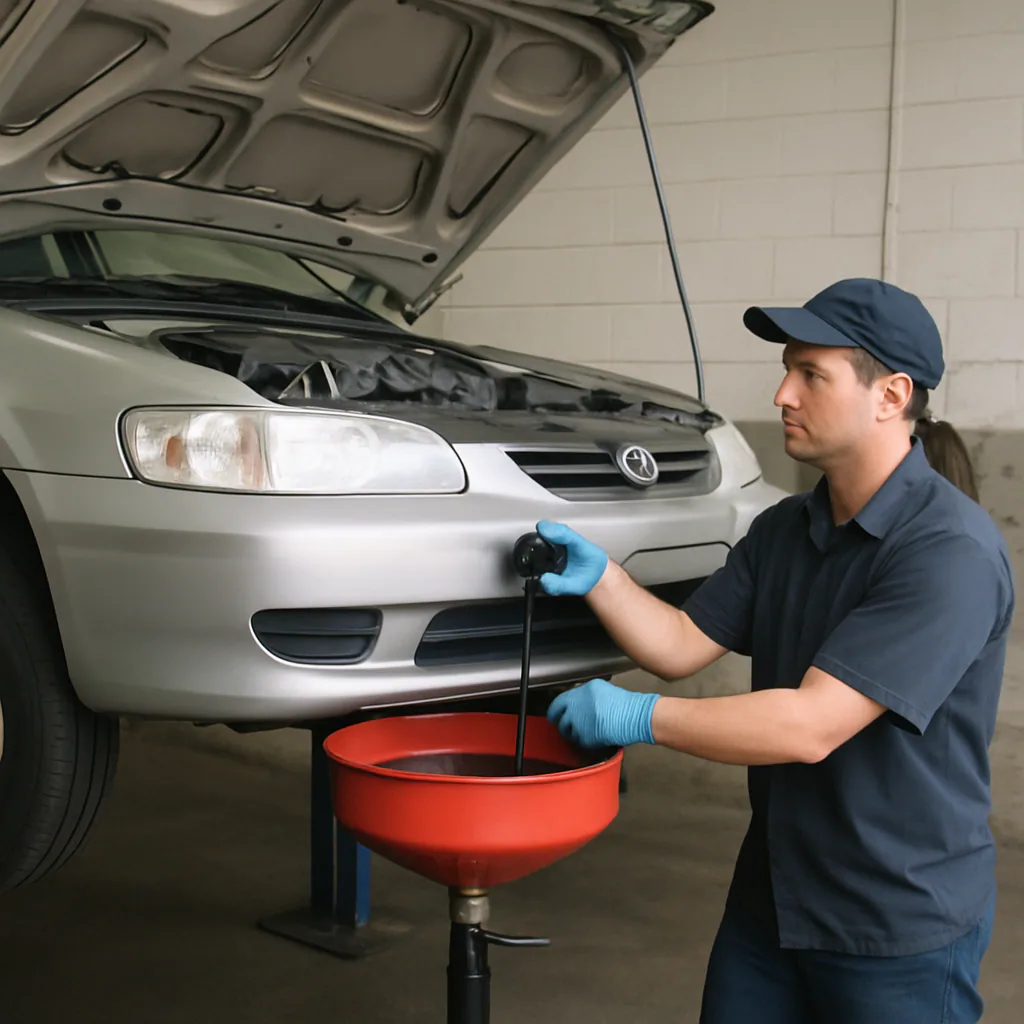
If you own a vehicle, you have likely found yourself standing at the service counter of an auto shop, or perhaps staring at a sticker on your windshield, wondering: exactly how often should u change your oil?
For decades, the standard advice was drilled into the minds of drivers everywhere, dictating a strict, unyielding routine. However, thanks to massive advancements in automotive engineering and oil chemistry, that old-school rule of thumb has dramatically evolved. Today, determining the perfect oil change schedule for your car requires looking at a few different variables, including your driving habits, the type of oil your car uses, and the specific guidelines laid out by your manufacturer.
In this comprehensive guide, we will break down everything you need to know about engine oil replacement. From understanding the difference in oil types to recognizing the subtle warning signs your engine gives you, you will learn how to protect your vehicle’s most vital component.

The Evolution of Oil Change Intervals
In the past, the golden rule of auto maintenance was scheduling an oil change every 6 months or 5000 miles (and before that, it was an even stricter 3,000 miles). Mechanics and dealerships swore by this timeline to keep engines running smoothly.
However, modern engines are built to incredibly tight tolerances, and the fluids that lubricate them are highly advanced. Because of these technological leaps, strictly adhering to the 3,000-mile myth might just be a waste of your time, money, and environmental resources. Today, depending on your vehicle and the oil you use, typical oil change intervals can safely stretch anywhere from 5,000 to 10,000 miles, and sometimes even longer.
But how do you know where your car falls on that spectrum? The answer lies in the type of oil flowing through your engine block.
Conventional vs Synthetic Oil Service Life
To understand how long you can go between services, you must first understand the lifeblood of your engine. The chemical makeup of your motor oil dictates its lifespan and performance capabilities.
Conventional Motor Oil
Conventional oil is refined directly from crude oil. While it provides adequate lubrication for older engines or simple engine designs, it is more susceptible to breaking down under extreme heat and pressure. The conventional vs synthetic oil service life comparison heavily favors synthetic when it comes to longevity. If you are using conventional oil, you will likely need to stick closer to a 3,000 to 5,000-mile interval.
Full Synthetic Motor Oil
Synthetic oil is chemically engineered in a laboratory to provide superior performance. Its molecules are uniform in size, which reduces friction, and it contains robust additives that resist breaking down under stress. The average synthetic oil change interval mileage generally ranges between 7,500 and 10,000 miles, with some high-performance brands claiming to protect engines for up to 15,000 miles under ideal conditions.
Synthetic Blend
A middle ground between the two, synthetic blends offer some of the performance benefits of full synthetic at a lower price point. Vehicles using synthetic blends usually require servicing every 5,000 to 7,500 miles.
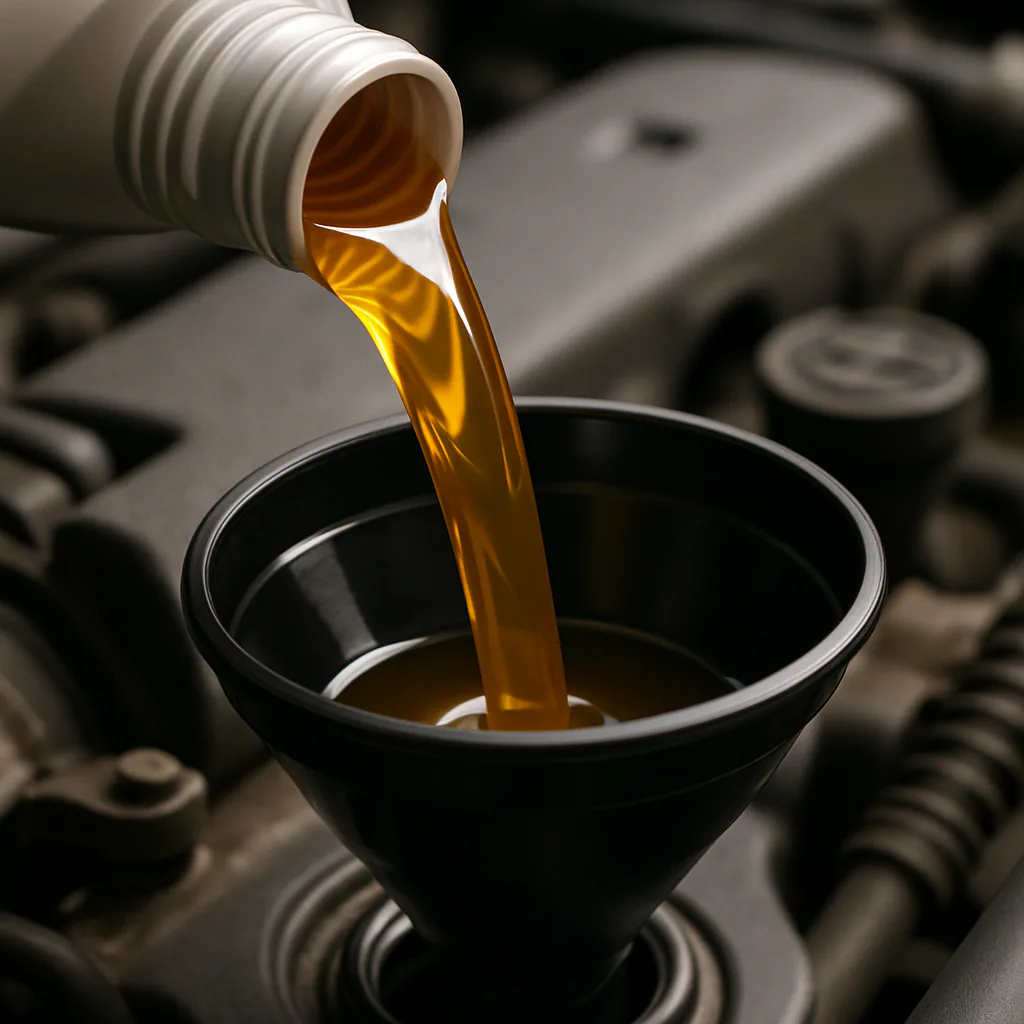
How Your Commute Impacts Your Oil: Severe Driving vs Normal Service Schedule
You might be surprised to learn that how you drive is just as important as what you drive. Most automakers provide two separate maintenance schedules: "normal" and "severe."
When you ask a professional, "how often should u change your oil?", their follow-up question will usually be about your daily commute. Many drivers assume they fall under the "normal" category, but you might actually be subjecting your car to severe driving conditions without realizing it.
You are likely on a severe driving vs normal service schedule if you frequently:
- Take short trips: Drives under five miles do not allow the engine to get hot enough to burn off condensation, leading to moisture buildup in the oil.
- Drive in stop-and-go traffic: Idling in rush hour puts immense stress on engine components and degrades oil faster.
- Tow heavy loads: Towing trailers or carrying heavy cargo forces the engine to work harder, generating excess heat.
- Drive in extreme temperatures: Blistering summers or freezing winters alter the oil’s flow and chemical stability.
- Drive on dusty, muddy, or salted roads: Airborne contaminants can bypass the air filter and end up in your engine oil.
If your daily life involves these conditions, you should err on the side of caution and opt for more frequent engine oil replacement.
Interpreting Oil Life Monitoring Systems
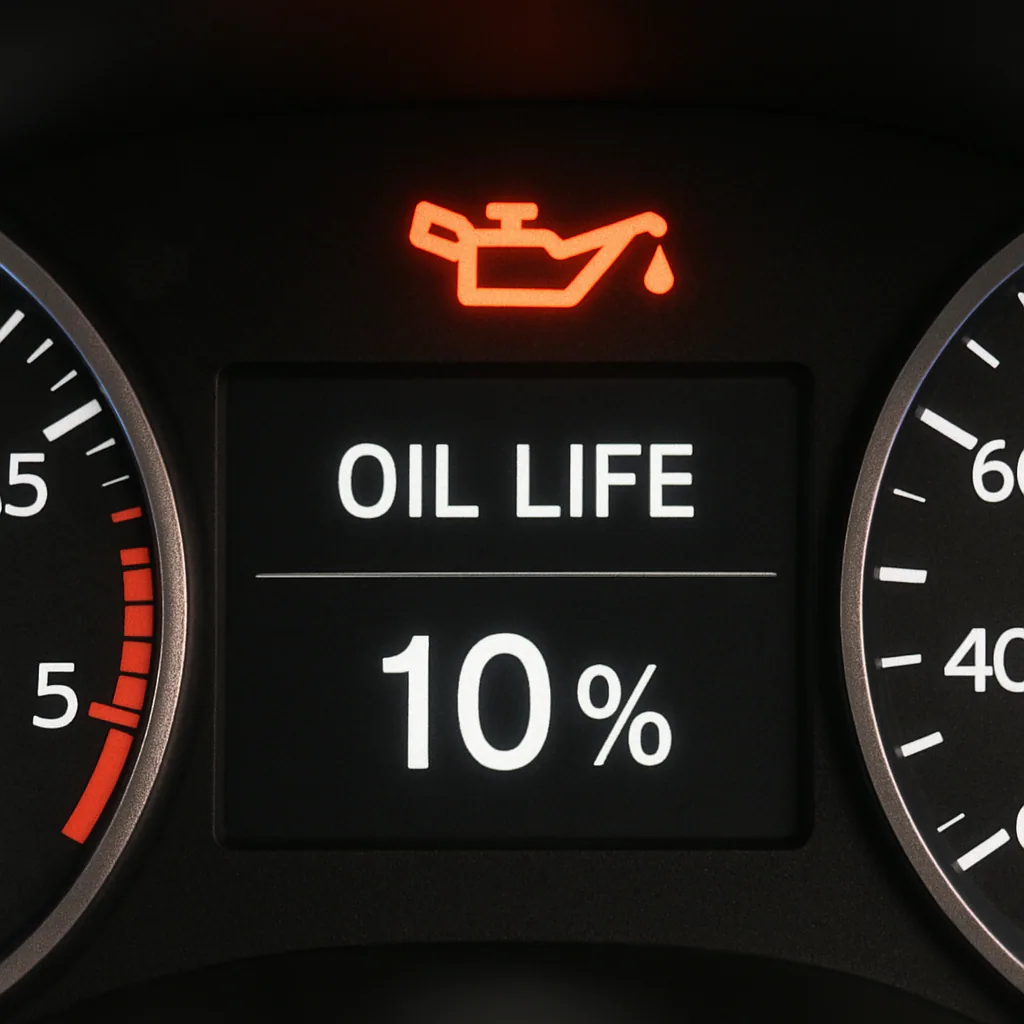
Gone are the days when you had to rely solely on a little transparent sticker in the corner of your windshield. Most modern vehicles are equipped with an Oil Life Monitor (OLM).
Interpreting oil life monitoring system data is relatively straightforward, but it helps to know how they work. Older systems were simple mileage trackers that flipped a light on the dashboard after a set number of miles. However, today’s advanced OLMs use complex algorithms. They monitor engine temperature, cold starts, driving hours, idling time, and engine RPMs to dynamically calculate the remaining life of your oil.
When your dashboard tells you that your oil life is at 15% or lower, it is time to schedule a service appointment. Just remember that these systems track the degradation of the oil, not the level of the oil. You still need to manually check your oil level with a dipstick occasionally to ensure you aren't running low or leaking.
Recognizing the Signs of Dirty Engine Oil
Even with advanced monitoring systems and general mileage guidelines, it is crucial to stay vigilant. Oil can degrade faster than expected due to a mechanical issue or environmental factors. Learning to recognize the signs of dirty engine oil can save you from catastrophic engine failure.
1. Unusual Engine Noises
Oil lubricates the metal parts of your engine. When it breaks down, it loses its ability to create a protective barrier. If you hear a loud ticking, tapping, or knocking sound coming from the engine bay, it means metal parts are striking against each other.
2. Checking Oil Color and Consistency
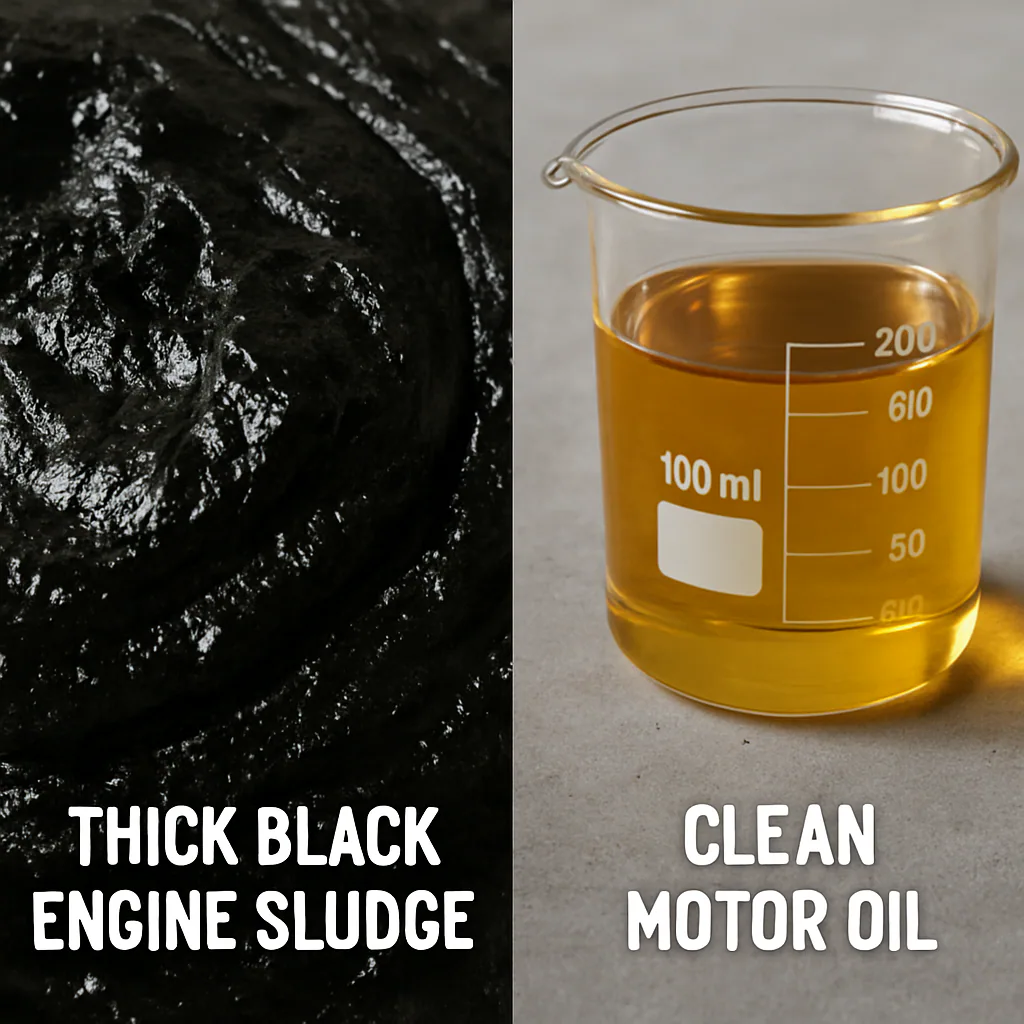
You should regularly pop the hood and pull the dipstick. Checking oil color and consistency is an excellent diagnostic habit. Fresh engine oil is a translucent, amber-gold color. As it flows through the engine, it picks up dirt, soot, and carbon deposits, eventually turning dark brown or black. While dark oil doesn't immediately mean it has gone bad, if it feels gritty or looks thick and muddy, it is time for a change.
3. Exhaust Smoke
While it is normal to see translucent white vapor coming from your tailpipe in the winter, thick blue or gray smoke is a major red flag. This indicates that oil is leaking into the engine's combustion chamber and being burned, which is often tied to poor oil quality and worn-out seals.
4. The Smell of Oil Inside the Cabin
If you smell burnt oil inside your car, there is a high probability of a leak. If it is accompanied by the smell of exhaust fumes, your engine might be overheating due to lack of lubrication.
Want a price for your car?
Text us what you need. Nearby independent mechanics bid. You see the first bid, and a later one only if it is lower. You pay when the work is done.
The Danger of Viscosity Breakdown and Engine Sludge
To truly appreciate the importance of regular oil changes, you must understand what happens to oil as it ages. The primary role of oil is to maintain its viscosity, its resistance to flow. You want oil to be thin enough to move quickly when you start a cold engine, but thick enough to protect moving parts when the engine is running hot.
Over time, prolonged exposure to high engine temperatures causes the chemical additives in the oil to deplete. This leads to viscosity breakdown and engine sludge. When oil loses its viscosity, it stops flowing like a liquid and begins to bake onto the engine components as a thick, gelatinous black tar known as sludge. Sludge blocks oil passages, suffocating the engine of the lubrication it desperately needs. Once sludge forms, it is notoriously difficult and expensive to remove, often requiring an engine teardown.
What Happens if You Wait Too Long?
We all get busy, and it can be tempting to push off auto maintenance for "just one more month." But the reality of engine damage from neglected oil changes is harsh and financially devastating.
When you skip oil changes, friction inside the engine increases dramatically. That friction generates heat, which can warp engine components, blow head gaskets and cause internal parts to fuse together. In the worst case, the engine can seize while you are driving. Replacing a seized engine is far more expensive than the routine service that would have prevented it.
Can I Go a Year Without an Oil Change?
A surprisingly common question among people who work from home or own a secondary, rarely-driven vehicle is: can I go a year without an oil change?
The short answer is: generally, no. Even if a vehicle sits parked in a garage and never hits its mileage limit, motor oil degrades over time. As oil sits in the crankcase, it is exposed to oxygen and temperature fluctuations, leading to oxidation. Furthermore, moisture from condensation can accumulate in the oil pan, causing acids to form that will slowly corrode your engine’s internal metal parts from the inside out.
Most manufacturers recommend changing your oil at least once every 12 months, regardless of how few miles you have driven.
Special Considerations: High Mileage Oil Change Requirements
As vehicles age and rack up the miles, their maintenance needs shift. Once a car crosses the 75,000-mile mark, it is officially classified as a "high mileage" vehicle. At this stage, you should look into mobile oil change for high-mileage cars.
Engines with high mileage naturally experience wear and tear. The rubber seals and gaskets begin to dry out, shrink, and crack, which leads to slow oil leaks and burning oil. High mileage motor oils are specifically formulated with special seal-swelling conditioners that rejuvenate these older gaskets, preventing leaks. They also contain higher doses of detergents to clean out years of accumulated deposits, making them a wise investment for keeping an older car on the road longer.
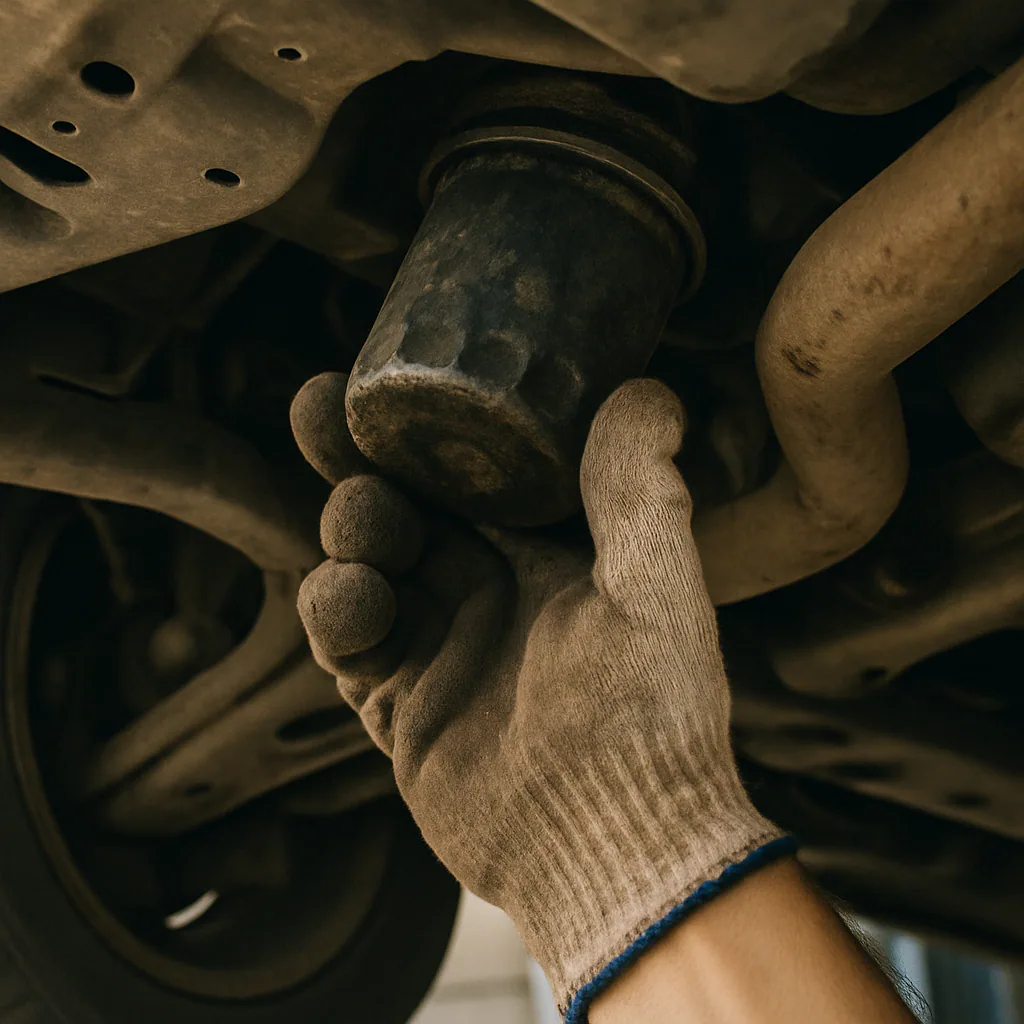
Don't Forget: Changing Oil Filter Every Service
A conversation about oil isn't complete without discussing its partner: the oil filter. The filter's job is to catch the microscopic metal shavings, dirt, and carbon buildup that the oil washes away from the engine parts.
Over time, the paper or synthetic media inside the filter becomes clogged. If a filter becomes completely blocked, a bypass valve will open to keep oil flowing to the engine, but this means dirty, unfiltered oil is now circulating through your delicate engine components.
Therefore, changing oil filter every service is absolutely non-negotiable. Putting fresh, clean synthetic oil into an engine with a dirty, clogged filter will instantly contaminate your new oil, completely defeating the purpose of the maintenance you just paid for.
The Bigger Picture: Engine Longevity and Regular Maintenance
Maintaining a proper oil change schedule is about more than just avoiding an immediate breakdown. It is the cornerstone of engine longevity and regular maintenance. A well-lubricated engine runs more efficiently, providing better fuel economy, smoother acceleration, and lower harmful emissions.
Furthermore, keeping a strict schedule is a vital form of preventative maintenance for vehicle resale value. When it comes time to sell or trade in your car, potential buyers and dealerships will look at the vehicle's maintenance history (often through a Carfax report). A documented history of regular, on-time oil changes proves to a buyer that the car was treated with care, allowing you to command a much higher asking price. Conversely, large gaps in maintenance history are massive red flags that will drastically lower your car's value.
Need a Hand? Ask a Mobile Mechanic
If you would rather not spend your time on an oil change, a mobile mechanic can do it at your home or office. Get free quotes or text (219) 533-8844. Nearby mechanics bid, you see the first bid and a later one only if it is lower, and you pay when the work is done. How soon a mechanic can come depends on availability. Text us anytime, day or night. Mechanics are usually available around the clock, depending on their schedules.