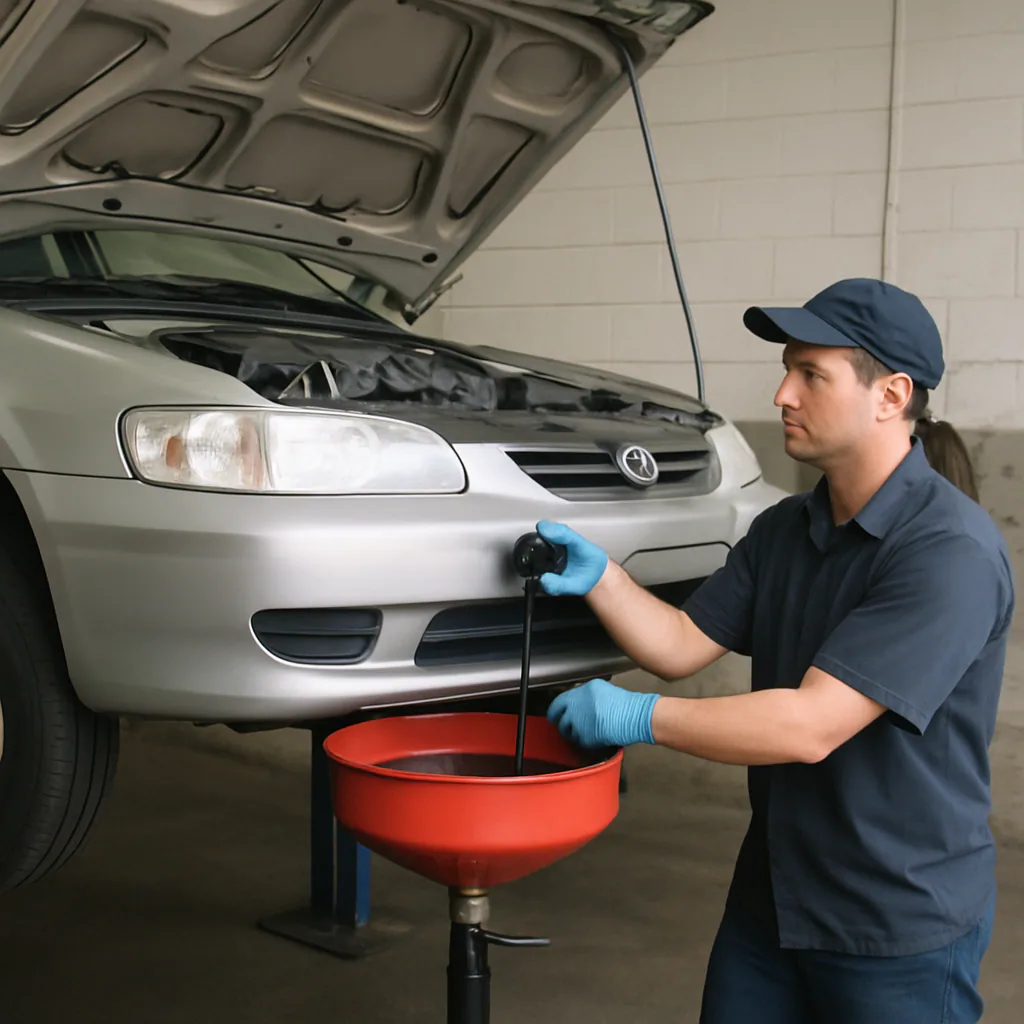
If you live in the Windy City, you know driving here is a unique experience. Dodging potholes on the Dan Ryan, idling in gridlock on the Kennedy and starting cold in sub-zero winters all take a toll on your car. Regular maintenance is not a suggestion. It keeps your engine running smoothly.
When the wrench icon lights up on your dashboard, you may wonder how much an oil change in Chicago will cost. This guide explains what goes into the price, by oil type and by vehicle, so you know what you are paying for. We do not list fixed prices, because they depend on your car, the oil, the shop and the day. Instead you will learn how to read a quote and compare it.

The Chicago Factor: Why Location Matters
Prices differ from place to place. Shops in a major city pay more for commercial rent and property taxes, and those costs are part of what they charge. Labor rates also follow the local cost of living. When you take your car to a shop in the city, part of the price covers the building and the staff. You may also see a small environmental or disposal fee on a receipt. That fee helps cover the safe recycling of used oil. Ask what fees are included when you ask for a price.
Oil Types and Why They Change the Price
The oil you choose is a big part of the price. Several types are available, each suited to different engines and driving habits. Follow your owner's manual for the right type and grade.
Conventional vs. Full Synthetic
Conventional oil comes from refined crude oil and usually costs the least. It breaks down sooner, so it needs changing more often. Full synthetic oil is engineered for protection in extreme temperatures, such as a freezing Chicago January or a July traffic jam. It costs more per service and often lasts longer between changes, so the long-term cost can narrow.
The Middle Ground: Synthetic Blend
A synthetic blend mixes conventional and synthetic base oils. It protects better than conventional oil at a lower price than full synthetic, and it can be a good fit for daily commuters. It generally does not last as long as full synthetic.
High Mileage Oil for City Drivers
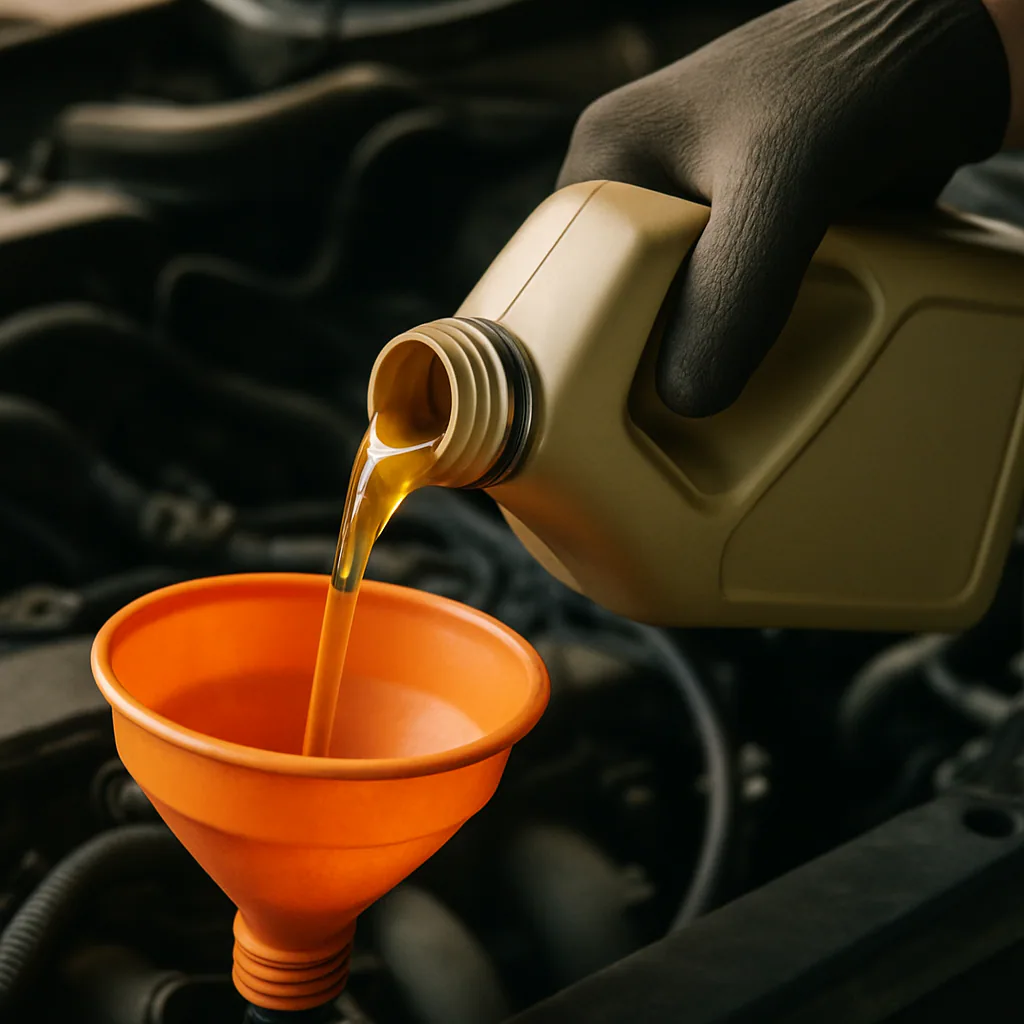
High-mileage oil is made for older engines. It includes seal conditioners that help with aging gaskets and extra detergents that help clean out buildup from years of stop-and-go driving. It is commonly recommended for engines with higher mileage, so check your manual or ask your mechanic.
Vehicle-Specific Factors: European Cars and Diesel Engines
Not all vehicles are the same, and their maintenance differs. A luxury European car or a heavy-duty diesel truck can cost more to service than a standard sedan.
Luxury European Vehicles
Cars like a BMW or a Mercedes often need specialized, premium full-synthetic oil that meets strict manufacturer specifications. Their engines can also hold more oil than a typical compact. A Honda Civic, for example, takes less oil than many European six-cylinder engines. Original equipment filters for these cars can also cost more than the filters used in many domestic cars.
Diesel Engine Oil Changes
A diesel oil change usually costs more than a gas engine's, for three main reasons:
- Oil volume: diesel engines can hold much more oil than a standard passenger car. A Ford Power Stroke can hold around 15 quarts
- Specialized oil: diesel engines produce more soot and need heavy-duty oil with specific additives
- Complex filters: diesel oil filters are larger, and the service may also include draining a water separator or topping off diesel exhaust fluid (DEF)
Want a price for your car?
Text us what you need. Nearby independent mechanics bid. You see the first bid, and a later one only if it is lower. You pay when the work is done.
A Line-Item Breakdown: Parts, Labor, Travel and Tax
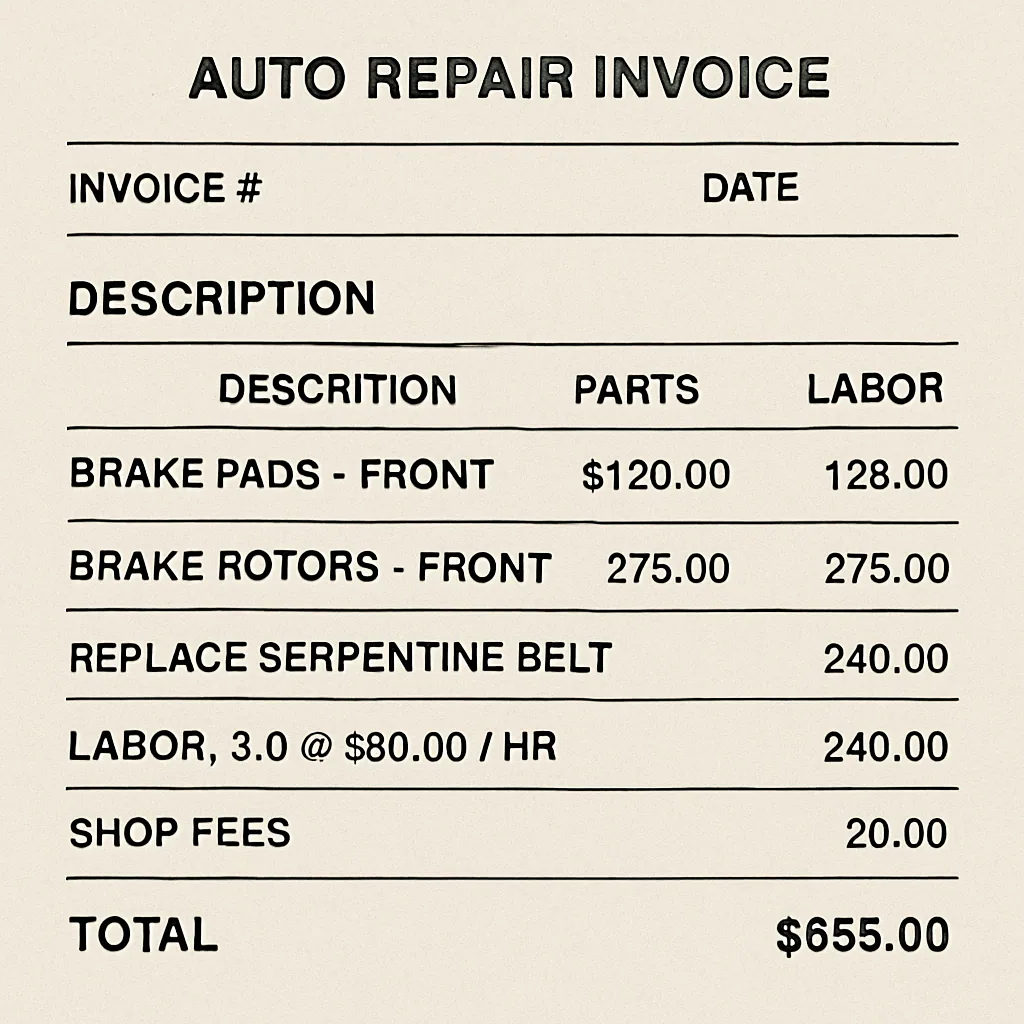
To understand an invoice, read it line by line. Here is how a typical quote is built.
1. Parts (Oil and Filter)
This is the cost of the oil and the filter. It depends on the oil type, how many quarts your engine holds and the filter your car needs.
2. Labor
Labor is the mechanic's time. Many shops price an oil change using a set amount of labor time, whether the job takes a little more or less on the day. Hourly rates differ by shop. On TravelMechanic, each mechanic works out the labor for your job at their own rate.
3. Shop Supplies and Disposal
Some shops add a small line for supplies such as rags and cleaners, plus a disposal fee for the used oil. Ask for the total price including these before you agree.
4. Travel Fee for Mobile Mechanics
With a mobile mechanic, the mechanic drives to you, whether your car is at your office in the Loop or your driveway in Naperville. The cost of that trip is a travel fee, and it depends on distance. A price on TravelMechanic is parts plus labor plus a travel fee plus sales tax.
Every quote is a best estimate. If anything changes, the mechanic shows you the new price before you pay more, and you get 100% of your money back if you say no. For a quick job like an oil change, the travel fee and a minimum amount of labor bring a mobile price close to a shop's. The benefit is skipping the drive and the wait. See worked examples on our pricing page.
Dealerships, Independent Shops, Quick-Lube Chains and Mobile Mechanics
Where you go changes the price. Here is how the options compare in general terms.
The dealership. Factory-trained technicians use manufacturer parts, and they check for recalls and software updates. Dealerships carry large overhead, such as showrooms and big staffs, so their oil change prices are often the highest. You pay for the brand and specialized service.
The independent repair shop. Local independent shops are the backbone of Chicago auto repair. With lower overhead than a dealership, their labor rates are often lower. Building a relationship with a local mechanic you trust is a good way to keep long-term costs down.
Quick-lube chains. Drive-thru spots offer speed, and their base prices for conventional oil can be competitive. Some also suggest extra services, such as air filters and wiper blades, at checkout. Ask for the out-the-door price first.
The mobile mechanic. Mobile mechanics come to you. Because of the travel fee, a basic oil change may cost about the same as at a shop. They are a good fit for busy professionals and parents who cannot spend an hour in a waiting room.
How to Avoid Hidden Fees and Overpaying
Knowledge helps. Most mechanics are honest, hardworking people, but misunderstandings about price can still lead to a frustrating checkout. Here is how to avoid surprises:
- Ask for an out-the-door price. Before you hand over your keys, ask for the total including taxes, supplies and disposal fees
- Check your owner's manual. Know which oil your car requires. If it only needs a synthetic blend, you do not have to buy a pricier grade
- Be ready for add-ons. It is normal for a technician to inspect your car and suggest other services. Ask them to show you the dirty filter or degraded fluid, and say no if you are not convinced
- Ask about parts. Mechanics on TravelMechanic supply the parts so they carry the manufacturer's warranty and fit your car
Ready to compare? Get free quotes or text (219) 533-8844. Nearby mechanics bid, and you see the first bid, and a later bid only if it is lower.