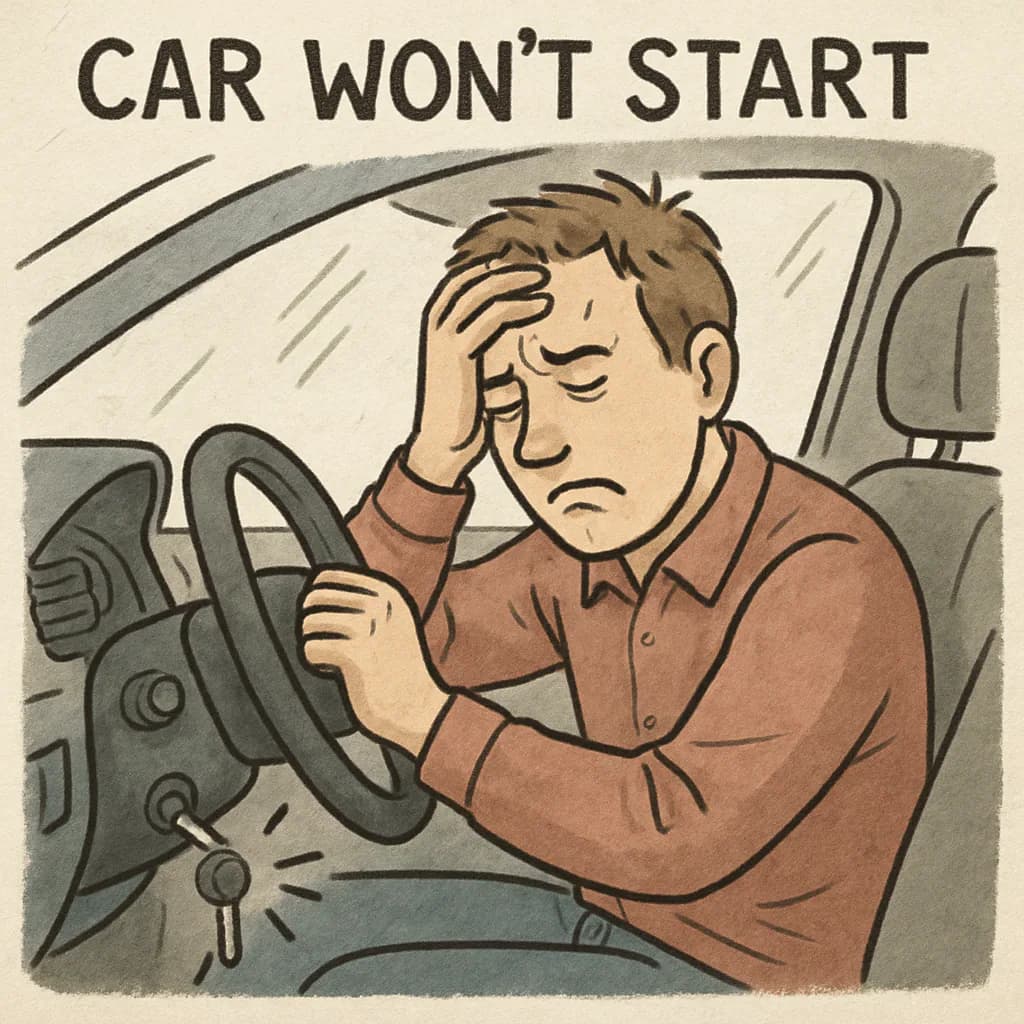
We've all lived through that Monday morning nightmare: turning the key and hearing a rapid, hollow click-click-click. That frustrating noise rarely happens without warning. A sluggish engine turnover-that lethargic "yawn" your car makes when starting-is actually your vehicle quietly asking for help. Recognizing this subtle symptom transforms you from a potentially stranded driver into an empowered owner.
Dead batteries are among the most common reasons drivers need a tow. Think of the battery like your smartphone: its power capacity degrades gradually over time. Many people ignore the clear signs of a dying battery until they are stranded in a parking lot. You can avoid that with basic, proactive observation.
Grasping what actually gives your engine life comes down to two measurements: Voltage and Cold Cranking Amps (CCA). Think of voltage as the resting potential-like water sitting quietly in a bucket-which merely confirms a basic charge exists. Meanwhile, CCA acts as the true muscle, measuring the explosive "push" needed to actually spin a heavy engine. A unit might show a perfect resting voltage but completely lack the CCA necessary to get you moving.
Performing a reliable car battery check does not require a mechanic's degree or expensive diagnostic equipment. Because you already know how to pop the hood, you have the exact foundation needed to take control of your vehicle's reliability. These quick, five-minute visual and technical steps will secure your peace of mind before tomorrow's commute.
The 'Eye Test': Spotting Trouble Before the Engine Quits
Now that the hood is safely propped open, you don't need special tools to spot the most common symptoms of a bad battery. Just like a bruised piece of fruit, a failing battery physically shows you it is struggling before it quits entirely. Take a close look at the plastic box and trust your senses to find these three specific visual red flags:
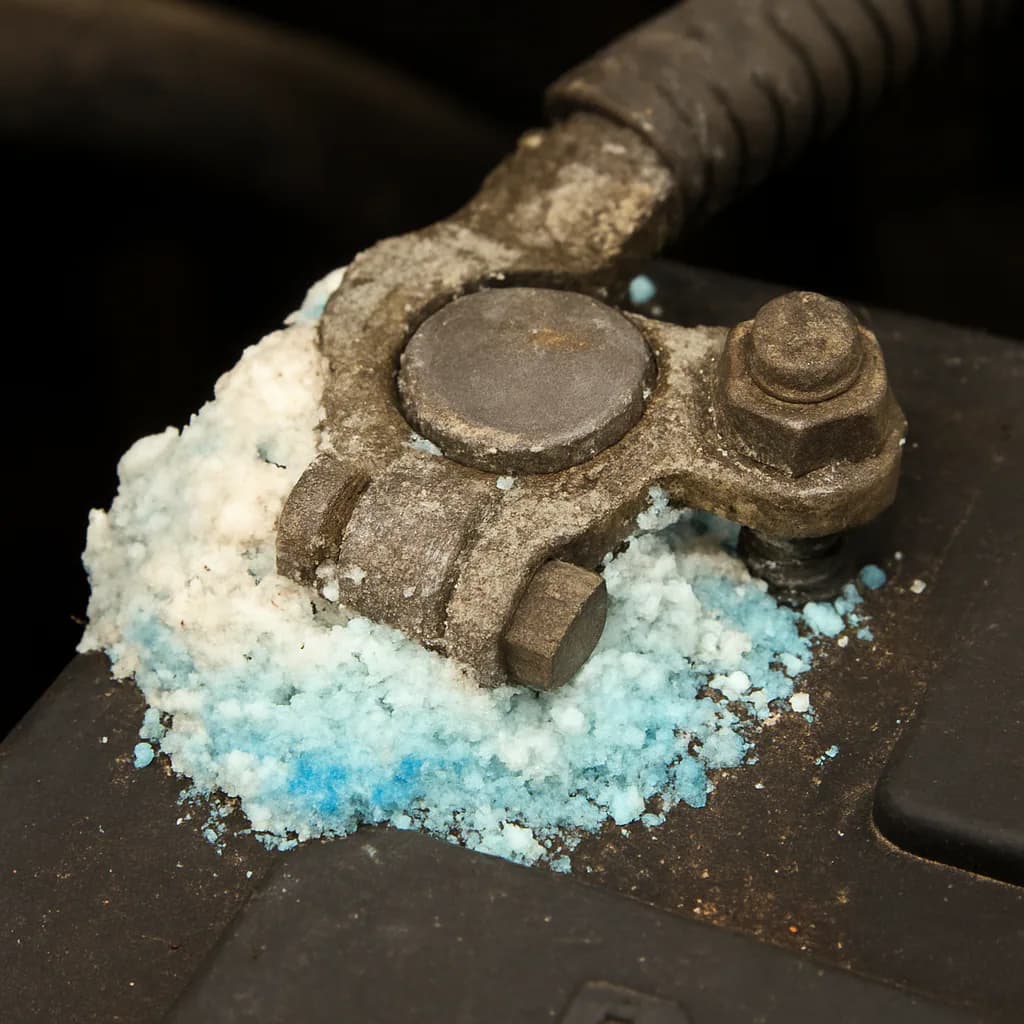
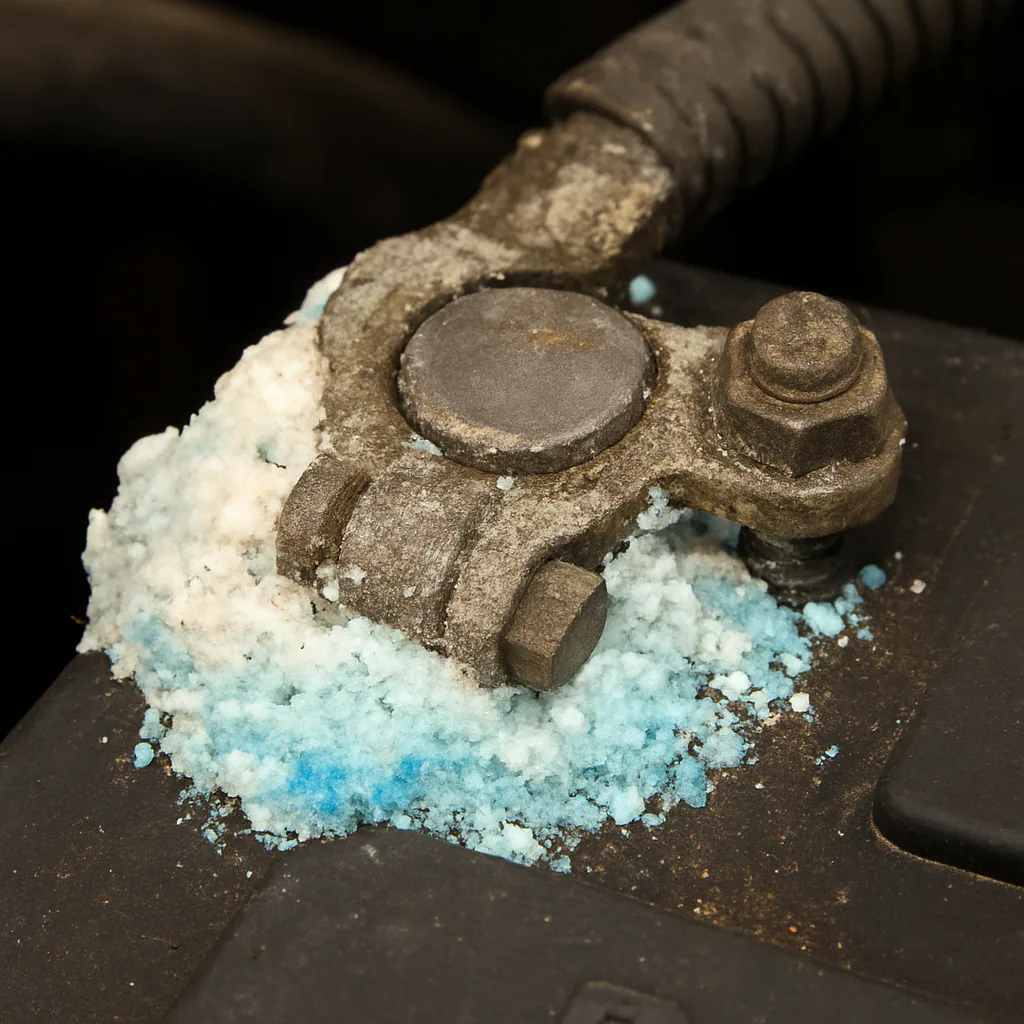
- Powdery buildup: Crusty white or blue fuzz around the top metal posts.
- Swelling: A bloated or distorted plastic casing.
- 'Rotten egg' smell: A sulfur odor warning of internal leaks.
That crusty buildup on the metal posts-known as the terminals-acts exactly like the fuzz on an old TV remote battery, physically blocking electricity from flowing freely. This resistance starves your engine of the power it needs to start. If you spot this messy barrier, learning how to clean battery terminal corrosion with simple household items like baking soda and an old toothbrush is an easy first fix.
Age is another silent killer you can verify right on the plastic box. Check for a heat stamp on car battery edges, which usually features a simple code where "A" means January, "B" means February, and the number is the year (like "23" for 2023). If that date is over four years ago, or if your visual inspection came up clean but the car still hesitates to start, it is time to measure the actual electrical pressure inside the box.
Testing Your Battery's 'Pressure' with a Multimeter
When the visual check looks clean, it is time to verify the actual electrical pressure. Think of your battery like a water tank; it won't push fluid through the pipes if the internal pressure drops too low. Learning how to check a car battery with multimeter probes gives you an exact numerical snapshot of that starting power, easily saving you a diagnostic fee at the mechanic.
Before taking any measurements, you must eliminate a tricky phenomenon called "surface charge." If you recently drove the car, the battery holds a temporary energy reserve-like a quick sugar rush-that tricks your tool into showing an artificially high score. Understanding how to test a car battery with a multimeter accurately means turning on your headlights for exactly one minute with the engine off. This simple step burns off that fake energy, leaving you with what professionals call the true "resting voltage."
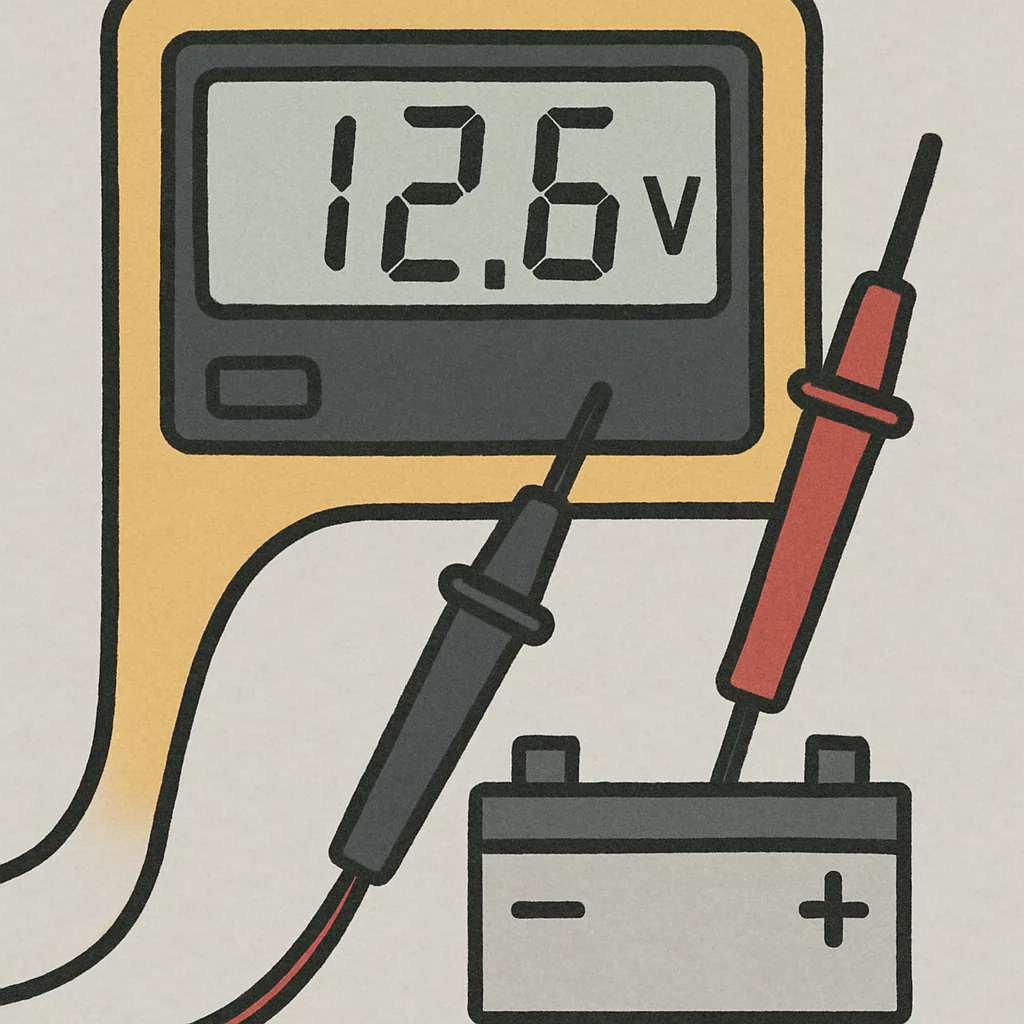
With your safety glasses still on, set your tool's dial to the "20V DC" setting. Firmly press the red metal probe against the positive terminal and the black probe against the negative one. The digital screen will instantly display a number representing the genuine electrical force available to wake up your vehicle.
Decoding that number tells you exactly how much life remains before you risk getting stranded on a Monday morning. A healthy car battery voltage range sits comfortably between 12.4 and 12.6 volts. If your screen shows 12.2 volts or lower, the unit is functionally dead and lacks the strength to crank the heavy metal parts inside your engine. But what if your reading is perfect, yet the car still dies while driving? That points to a different suspect entirely: your vehicle's charging system.
Is It the Battery or the Alternator? The 'Running Test' Secret
Imagine buying a brand-new smartphone, only to realize the wall charger is completely broken. That is exactly what happens when your alternator fails; it acts as your vehicle's built-in charging station. If you ever find yourself asking, "why is my car battery light on" while driving, that glowing dashboard icon is actually warning you that the alternator has stopped generating power, leaving your car running strictly on its limited battery reserves.
To save money and avoid replacing a perfectly good part, you can easily spot the culprit by checking the symptoms of a bad alternator vs battery:
- Failing Battery: Sluggish engine cranking, clicking noises when turning the key, or needing frequent morning jump-starts.
- Failing Alternator: Headlights dimming at stoplights, a noticeable whining noise from under the hood (a classic sign of internal diode failure), or a car that starts fine but stalls out while driving.
Diagnosing this system yourself takes just 60 seconds. Leave your multimeter connected to the battery terminals and have a helper start the car. Because the alternator must produce a higher electrical "pressure" to force energy back into the battery, a healthy charging system will make your screen jump up to between 13.5 and 14.5 volts. Seeing a number that stays near 12.6 volts or slowly drops proves the alternator is dead. However, if your charging system passes this test but your vehicle still hesitates, your battery might be weak under load. You can simulate cold starting conditions at home to verify its overall strength.
The 'Stress Test' at Home: Simulating a Cold Morning Start
Just like a runner who looks perfectly healthy standing still but collapses on a treadmill, your battery might show a perfect 12.6 volts while resting but fail completely when forced to work. This hidden weakness is why understanding cold cranking amps meaning and importance is crucial for daily drivers. That specific rating tells you exactly how much raw electrical "muscle" your battery can deliver to wake up a freezing engine. If the internal plates are tired, the battery simply will not have the strength to push past the heavy physical resistance of starting a cold motor.
You do not need expensive shop tools to check this hidden strength yourself. By load testing a car battery at home using that same simple multimeter, you can instantly see how your vehicle handles a high-stress situation. Leave your meter connected to the metal posts and have your helper turn the key to start the engine while you watch the screen. For a split second during that heavy cranking, the battery's electrical pressure will plummet as it dumps massive amounts of energy into the starter.
The lowest number flashing on your display reveals the honest truth about your battery's health. If the reading temporarily drops to around 10 volts before quickly bouncing back up, your system is fully capable of handling your commute. Seeing the numbers crash below 9.6 volts proves the battery has failed its stress test and needs immediate replacement. Because extreme temperatures drastically alter how this internal chemistry performs, you will soon see how winter versus summer weather dictates your entire maintenance routine.
Want a price for your car?
Text us what you need. Nearby independent mechanics bid. You see the first bid, and a later one only if it is lower. You pay when the work is done.
Winter vs. Summer: Why Seasonality Dictates Your Maintenance Routine
Most drivers blame freezing mornings for dead batteries, but summer heat is a silent killer too. In high temperatures, the liquid inside a standard battery can evaporate. That weakens the internal chemistry and can shorten the battery's life in hot climates.
Protecting your vehicle's starting power requires adapting to the forecast. To keep that crucial energy flowing all year, follow this seasonal checklist:
- Summer: Park in the shade when possible and check your battery case for bulging caused by extreme under-hood heat.
- Winter: Insulate metal posts with anti-corrosion spray, and use key winter car battery maintenance tips like plugging into a small trickle charger if your car sits idle in the snow.
If you constantly battle harsh weather, upgrading your hardware is a smart investment. The benefits of AGM vs lead-acid batteries are massive for daily drivers; AGM (Absorbent Glass Mat) technology uses internal fiberglass pads to hold the chemicals like a sponge, preventing evaporation and freezing entirely. Yet, even the toughest AGM battery will eventually die if your parked vehicle is secretly stealing power overnight through a parasitic draw.
The 'Silent Drain' Mystery: Finding Parasitic Draws
Frustrated by a dead battery on a Monday morning when you know the headlights were off? When wondering what causes a car battery to lose charge overnight, the answer is often a "parasitic draw." Think of this like a leaky household faucet; even when the car is completely turned off, a tiny electrical leak is slowly draining the battery's energy. Common culprits are surprisingly simple, like a stuck glovebox light, a broken trunk switch, or a faulty aftermarket alarm system.
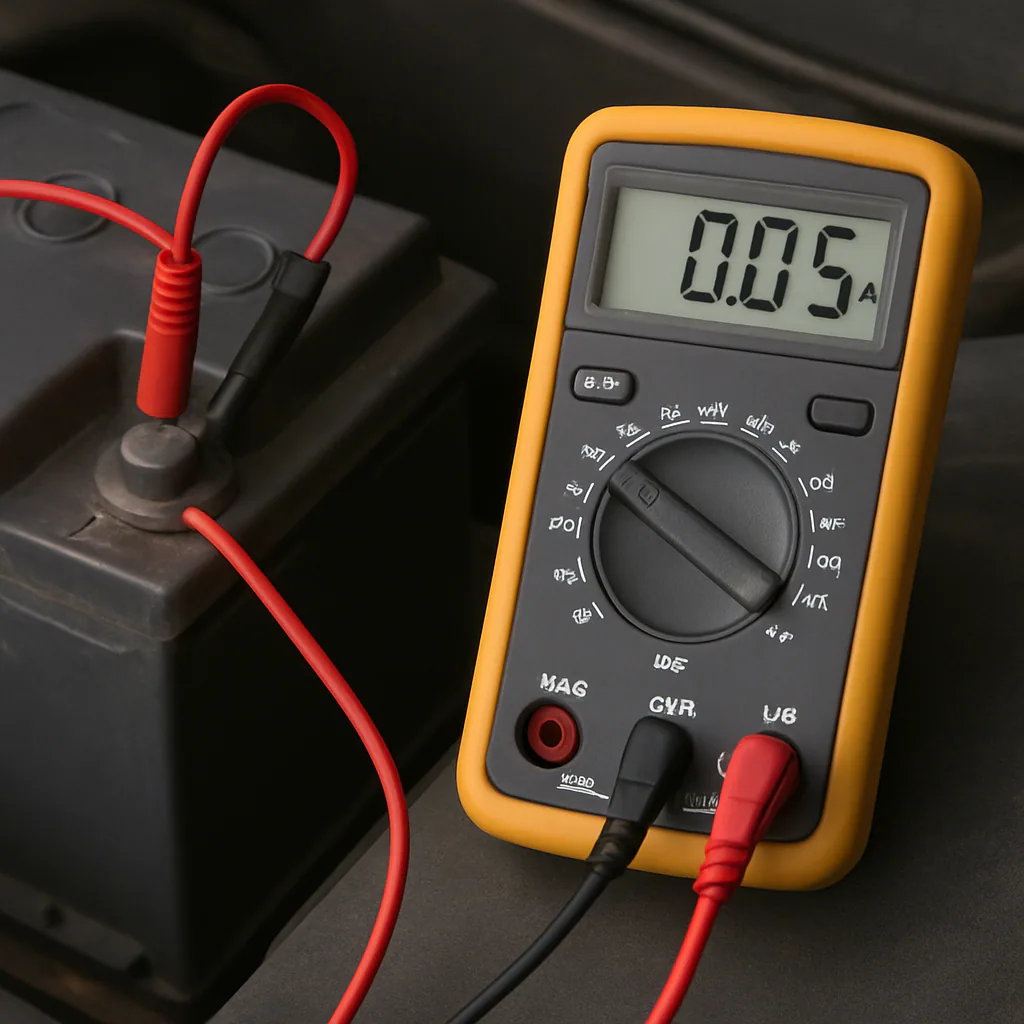
To catch this silent thief, you can perform a basic parasitic draw test procedure using your multimeter. With your safety glasses on and the engine off, create a "series connection" by unhooking the negative battery cable and placing the multimeter probes between the battery post and that removed cable. This setup forces the remaining electricity to flow directly through your tool. A healthy, sleeping car should only pull about 50 "milliamps" (a tiny fraction of an Amp) to keep things like the dashboard clock alive, so a significantly higher reading instantly confirms an electrical leak.
Finding the exact source requires pulling out your car's fuses one by one until the meter's number drops back to normal. If checking basic interior light fuses doesn't solve the drain, it is time to hire a professional auto-electrician to track down deeper wiring bugs. Stop relying on luck to start your engine; taking control of your vehicle's health means staying ahead of these invisible threats with a proactive maintenance roadmap.
Your Proactive Maintenance Roadmap: A 5-Step Action Plan
You no longer have to cross your fingers when you turn the key. By mastering basic car battery maintenance, you have transitioned from an intimidated driver to an empowered owner. You now know exactly what is happening under the hood, and you understand that 12.6V is king. Apply that measurement as your binary "Go/No-Go" rule before road trips to guarantee a reliable journey.
To establish a routine that maximizes battery lifespan, simply follow The 'Empowered Owner' Checklist:
- Monthly visual check: Inspect the plastic casing for bloating and the metal posts for crusty white corrosion.
- Quarterly voltage check: Grab one of the best portable car battery testers for DIY use to confirm your power levels.
- Seasonal terminal cleaning: Keep those connections completely clean so power flows freely.
Start by popping the hood today just to look around and build your familiarity. Pro-tip: When it is finally time to replace your unit, always check the manufacture date sticker to ensure you are buying a fresh battery, not one that has been slowly draining on a store shelf for a year. You now have the confidence to avoid that dreaded Monday morning silence. Grab your gloves and go see what your car is telling you.
Need a Hand? Ask a Mobile Mechanic
If your battery tests weak, a mobile mechanic can replace it at your location. Get free quotes or text (219) 533-8844. Nearby mechanics bid, you see the first bid and a later one only if it is lower, and you pay when the work is done. How soon a mechanic can come depends on availability. Text us anytime, day or night. Mechanics are usually available around the clock, depending on their schedules.